



Tekstversie
Hormooninformeerde zorg voor vrouwen met psychose
Een mogelijk beschermend effect van estrogeen tegen psychose is al lang beschreven in wetenschappelijk en epidemiologisch onderzoek. U herkent dit fenomeen wellicht van de vrouwspecifieke tweede incidentiepiek van schizofrenie, die later in het leven optreedt rond de perimenopauze, wanneer de oestrogeenspiegels dalen.
Hoe moet deze kennis uw klinische besluitvorming beïnvloeden? Hoe werkt estrogeen samen met de standaardbehandeling van psychose? En wanneer zou het de behandeling zelf moeten zijn? Een recente review gepubliceerd in Lancet Psychiatry werpt licht op de rol van ovariële hormonen bij psychose en biedt aanbevelingen voor het integreren van deze informatie in de praktijk en het bieden van hormooninformeerde zorg.
Download de PDF en andere bestanden
Perimenstruale psychose-exacerbatie verschilt van PMDD
De auteurs voerden een narratieve review uit met als doel de relatie tussen de menstruatiecyclus en psychotische symptomen te beschrijven, de manieren waarop ovariële hormonen antipsychotische behandelingen zowel kunnen beïnvloeden als erdoor beïnvloed kunnen worden, en de rol van op estrogeen gebaseerde behandelingen bij het beheer van psychose. Een aantal van hun bevindingen viel mij bijzonder op.
De auteurs beschreven dat psychotische symptomen de neiging hebben te verergeren en dat het risico op ziekenhuisopname toeneemt tijdens de perimenstruale fase. De perimenstruale fase omvat een periode van vier tot zes dagen in de late luteale fase en vroege folliculaire fase, wanneer zowel estrogeen als progesteron op hun laagste niveau zijn. In begrijpelijke termen zou ik dit aan patiënten omschrijven als de paar dagen voor en na het begin van de menstruatie.
Opvallend is dat dit exacerbatiepatroon verschilt van het patroon dat klassiek wordt beschreven en onderwezen voor de premenstruele dysfore stoornis (PMDD). Bij PMDD zijn stemmingssymptomen ernstiger in de luteale fase, en het begin van de folliculaire fase met de menstruatie brengt verlichting, vaak vrijwel onmiddellijk.
Symptomen prospectief bijhouden over meerdere cycli
Voor patiënten bij wie symptoomschommelingen in relatie tot de menstruatiecyclus worden vermoed, adviseren de auteurs prospectief de symptomen bij te houden over twee tot drie menstruatiecycli met behulp van instrumenten zoals de Daily Record of Severity of Problems (DRSP). De DRSP bevat feitelijk geen specifieke categorie voor psychotische symptomen, dus u en de patiënt zouden er zelf een moeten toevoegen.
Ik onderschrijf deze aanbeveling en zou willen benadrukken dat wanneer u de gegevens interpreteert, het aanhouden van psychose-exacerbatie in de vroege dagen van de menstruatiecyclus uw hypothese juist bevestigt in plaats van ontkracht.
Download de PDF en andere bestanden
Hormoonspiegels sturen de behandeling zelden
Mij wordt vaak gevraagd of het zinvol is om bij deze patiënten als onderdeel van de beoordeling hormoonspiegels te bepalen. Op basis van deze review, en in lijn met mijn klinische ervaring, is het antwoord over het algemeen nee. Bij psychose, zoals bij andere menstruatiecyclus-gerelateerde stemmingsexacerbaties, lijkt de verergering van symptomen meer samen te hangen met de individuele gevoeligheid voor hormonale schommelingen dan met afwijkende absolute concentraties.
Hoewel in sommige studies is aangetoond dat oestrogeenspiegels lager zijn bij premenopauzale vrouwen met psychose dan bij gezonde controles, is deze bevinding niet duidelijk onafhankelijk van het hogere gebruik van prolactineverhogende antipsychotica, en zou zij mijn klinische besluitvorming niet beïnvloeden.
Prolactinesparende antipsychotica verdienen de voorkeur als eerstelijnsbehandeling
Hoewel ik het bepalen van hormoonspiegels in het bloed ter onderbouwing van het behandelplan niet zou aanbevelen, denk ik dat patiënten baat kunnen hebben bij een behandelstrategie die oestrogeensuppressie en -schommelingen tot een minimum beperkt.
Prolactinesparende antipsychotica zoals aripiprazol hebben in internationale consensusrichtlijnen de voorkeur als eerstelijnsbehandeling voor vrouwen met niet-affectieve psychose, vanwege hun algehele bijwerkingenprofiel. Zoals deze review benadrukt, hebben ze bovendien het extra voordeel dat ze minder snel hypooestrogene symptomen en menstruele onregelmatigheden veroorzaken.
Het opsporen en behandelen van hyperprolactinemie is belangrijk. De auteurs adviseren over te schakelen op een prolactinesparend middel of adjunctief lage doses aripiprazol toe te voegen als hyperprolactinemie ontstaat, in plaats van simpelweg de dosis van het huidige geneesmiddel te verlagen.
Download de PDF en andere bestanden
Estrogeen remt het CYP1A2-metabolisme
Een andere belangrijke conclusie uit de review is dat het metabolisme van verschillende antipsychotica wordt beïnvloed door oestrogeenspiegels. Estrogeen, inclusief de ethinylestradiol in gecombineerde orale anticonceptiva, heeft een sterk remmend effect op CYP1A2, wat kan leiden tot hogere plasmaconcentraties van clozapine, olanzapine en mogelijk asenapin.
Als een patiënt clozapine, olanzapine of asenapin gebruikt, zorg er dan voor dat uw medische anamnese vragen bevat over de reproductieve fase, de regelmaat van de menstruatiecyclus en het type anticonceptie. Evalueer eventuele wijzigingen in deze informatie gedurende de tijd.
Wat de interactie met estrogeen in de praktijk betekent, is dat dezelfde dagelijkse dosis van deze antipsychotica bij een individu kan resulteren in verlaagde plasmaconcentraties op momenten dat de oestrogeenspiegels dalen. Bijvoorbeeld:
- Tijdens de perimenstruale fase van de menstruatiecyclus
- Tijdens de menopauze
- Na het stoppen met gecombineerde orale anticonceptiva of hormoonvervangingstherapie
Klinisch geldt: als eerder goed gecontroleerde symptomen in deze contexten terugkeren, overweeg dan dat de dosis in feite is gedaald en mogelijk verhoogd moet worden om hetzelfde plasmaniveau te handhaven. Omgekeerd wordt aanbevolen clozapine te starten op de helft van de gebruikelijke begindosis bij vrouwen die gecombineerde orale anticonceptiva gebruiken, om het risico op bijwerkingen te minimaliseren.
De auteurs merken echter op dat er minder formele gegevens zijn die een noodzaak tot dosisaanpassing van antipsychotica tijdens het hormoonvrije interval van een oraal anticonceptivum ondersteunen. Ik ben het ermee eens dat het verlagen van de antipsychotische dosis gedurende die dagen voor de meeste patiënten klinisch niet noodzakelijk lijkt, en dat ingewikkeldere doseerschema’s de therapietrouw kunnen beïnvloeden.
Wanneer hormonen de behandeling worden
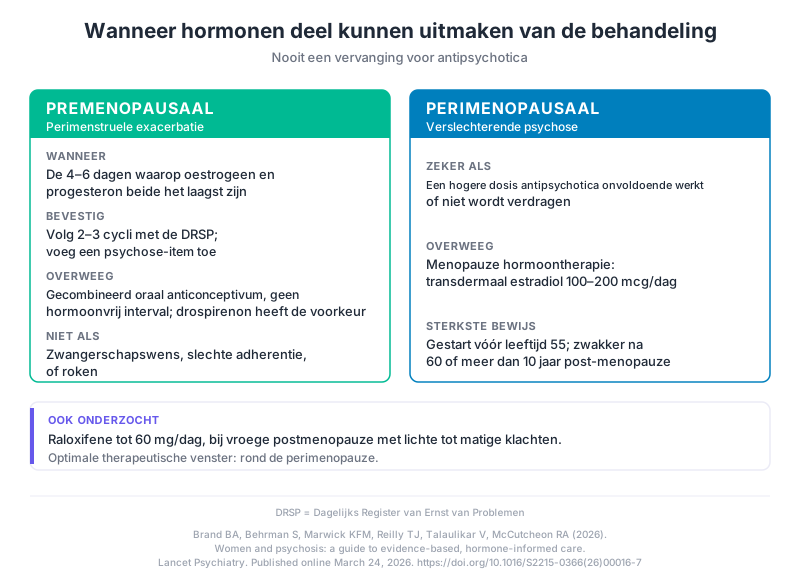
Hoewel al deze punten betrekking hebben op de manier waarop hormonen met de behandeling kunnen interageren, is een veelgestelde vraag wanneer hormonen de behandeling zouden moeten zijn, of dat überhaupt het geval zou moeten zijn. De auteurs benadrukken dat op estrogeen gebaseerde behandelingen geen standaard onderdeel zijn van de zorg voor vrouwen met psychose. Zeker, op estrogeen gebaseerde behandelingen mogen de rol van antipsychotica niet vervangen, maar er zijn enkele klinische scenario’s waarbij het opnemen van hormonale behandeling in het plan overwogen kan worden.
Download de PDF en andere bestanden
Gecombineerde orale anticonceptiva voor premenopauzale vrouwen
Voor vrouwen die premenopauzaal zijn en perimenstruale exacerbaties van symptomen ervaren, kunnen gecombineerde orale anticonceptiva gebruikt zonder hormoonvrij interval behulpzaam zijn bij vrouwen die gevoelig zijn voor hormonale schommelingen. In deze gevallen geef ik de voorkeur aan preparaten met drospirenon.
Niet alle patiënten zijn geschikte kandidaten voor deze aanpak. Twee voorbeelden zijn wanneer de patiënt in de nabije toekomst een zwangerschap wenst, of juist zwangerschap wil vermijden maar moeite heeft om dagelijkse medicatie trouw in te nemen. De meeste spiraaltjes en andere langwerkende anticonceptiemethoden zijn op progesteron gebaseerd en zouden naar verwachting niet op dezelfde manier een potentieel voordeel bieden.
Als de anticonceptiedoelen van de patiënt niet overeenkomen met het gebruik van gecombineerde orale anticonceptiva, geef ik prioriteit aan anticonceptie. Een andere veelvoorkomende contra-indicatie waarop u bedacht moet zijn, is sigarettenroken, wat de cardiovasculaire risico’s van orale anticonceptiva vergroot.
Menopauzale hormoontherapie in de perimenopauze
Voor vrouwen die perimenopauzaal zijn en een verergering van psychotische symptomen ervaren, kan menopauzale hormoontherapie worden overwogen. Dit geldt met name als het verhogen van de dosis van hun antipsychoticum niet wordt verdragen of niet effectief is, of als zij andere symptomen ervaren die baat kunnen hebben bij menopauzale hormoontherapie, zoals opvliegers.
De review benadrukt dat de sterkste gegevens voor voordeel bij psychose afkomstig zijn van onderzoeken waarbij gebruik werd gestart vóór de leeftijd van 55 jaar en waarbij transdermale estradiolpleisters van 100 tot 200 mcg per dag werden gebruikt. De gegevens zijn minder overtuigend bij vrouwen ouder dan 60 jaar of meer dan 10 jaar na hun laatste menstruatie.
Raloxifeen, een oestrogeenagonist in de hersenen en botten die oorspronkelijk werd goedgekeurd voor de behandeling van osteoporose, heeft ook enige gegevens die suggereren dat doses tot 60 mg per dag nuttig kunnen zijn bij vrouwen in de vroege postmenopauze met lichte tot matige ziekte. Al met al wijzen deze bevindingen op een optimaal therapeutisch venster rond de perimenopauze, wat overeenkomt met andere voordelen die zijn waargenomen voor menopauzale hormoontherapie.
Download de PDF en andere bestanden
Hormooninformeerd zonder hormonen voor te schrijven
Tot slot wil ik benadrukken dat u geen hormonale behandelingen op eigen houtje hoeft te gaan voorschrijven om hormooninformeerd te zijn in uw probleemformulering en behandelplanning. Wanneer u en een patiënt van mening zijn dat zij baat kunnen hebben bij een op estrogeen gebaseerde behandeling, is samenwerking met de gynaecoloog of huisarts van de patiënt een uitstekend startpunt.
Abstract
Samenvatting van het oorspronkelijke artikel, weergegeven in het Engels.
Women and psychosis: a guide to evidence-based, hormone-informed care
Bodyl A Brand, PhD, Sophie Behrman, MRCPsych, Katie F M Marwick, MRCPsych PhDc ∙ Thomas J Reilly, MRCPsych, Prof Iris E C Sommer, MD PhD, Vikram Talaulikar, MD PhDd, et al.
Psychosis is associated with sex differences that are rarely considered in routine care. Oestrogen exerts protective effects, with symptom exacerbation and increased relapse risk occurring during low-oestrogen states, such as perimenstruation, postpartum, and menopause transition. Antipsychotic pharmacokinetics and response vary by sex and hormonal status, with premenopausal women requiring lower doses, and postmenopausal women showing reduced treatment efficacy. Antipsychotic-induced hyperprolactinaemia can suppress endogenous oestrogen, compounding both mental and physical health risks. Despite this, treatment guidelines remain largely sex neutral. This Review outlines the role of ovarian hormones in psychosis and offers practical considerations to support the first steps towards implementing hormone-informed care, providing a conceptual framework to guide clinical decision making with the aim of improving outcomes for women with psychosis across the lifespan. Key recommendations include thorough assessment of hormonal status, sex-specific prescribing, and the judicious use of oestrogen-based interventions such as hormonal contraception, hormone therapy, and oestrogen receptor modulators.
Download de PDF en andere bestanden
Referentie
Brand, B.; Behrman, S.; Marwick, K.; Reilly, T.; Sommer, I.; Talaulikar, V. et al. (2026). Women and psychosis: a guide to evidence-based, hormone-informed care. The Lancet Psychiatry; 13(6):508-521.
