



In het kort
Bupropion is een norepinefrine- en dopamineheropnameremmer zonder significante serotonerge effecten. Het middel kan bijzonder nuttig zijn voor patiënten bij wie depressie gepaard gaat met vermoeidheid, concentratieproblemen of anhedonie. Het gunstige profiel ten aanzien van seksuele disfunctie en gewichtstoename maakt bupropion een aantrekkelijke optie wanneer deze aspecten van belang zijn. Het risico op epileptische aanvallen — dosisafhankelijk en beheersbaar voor de meeste patiënten bij een adequate dosering — vereist zorgvuldige afweging bij risicogroepen. Evenzo kan de kans op insomnie en angst het gebruik bij bepaalde patiënten beperken, hoewel de traditionele bezwaren tegen het gebruik van bupropion bij angstige patiënten inmiddels worden betwist (zie Indicaties, depressieve stoornis).

- Bupropion boven andere antidepressiva verkiezen:
- Depressie met op de voorgrond staande vermoeidheid, gebrek aan energie of anhedonie
- Zorgen over seksuele disfunctie of gewichtstoename
- Behoefte aan rookstopbegeleiding
- Preventie van seizoensgebonden affectieve stoornis
- SSRI-geïnduceerde seksuele disfunctie
- Alternatieven verdienen de voorkeur bij:
- Patiënten met risicofactoren voor epileptische aanvallen (zie het onderdeel Bijwerkingen hieronder)
- Significante insomnie of agitatie, hoewel uit onderzoek blijkt dat bupropion een vergelijkbare verbetering geeft van comorbide angstklachten en vergelijkbare percentages activerende bijwerkingen als SSRI’s (zie Bijwerkingen)
- Patiënten met eetstoornissen, met name boulimia
Farmacodynamiek en werkingsmechanisme
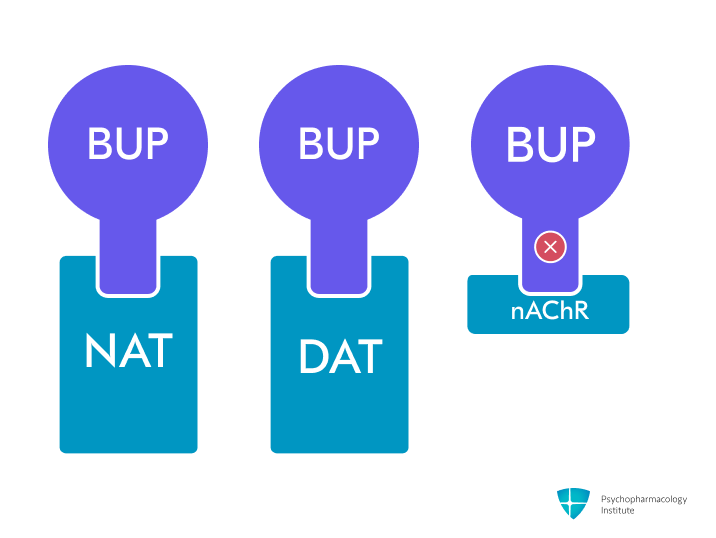
- Primair werkingsmechanisme: norepinefrine- en dopamineheropnameremming (NDRI) via NET- en DAT-blokkade [1]
- Beïnvloedt de serotonineheropname niet en heeft geen significante activiteit op serotonerge, adrenerge, muscarinerge en histaminerge receptoren [2]
- Dopaminerge effecten
- Zwakke dopamineheropnameremming in vergelijking met stimulantia [4]
- In tegenstelling tot amfetaminen werkt bupropion niet als dopamine-vrijmakend agens [4]
- Verklaart mogelijk de werkzaamheid bij depressie met op de voorgrond staande anhedonie en vermoeidheid [5]
- Blokkade van de dopamineterugname in het mesolimbische dopaminesysteem verklaart mogelijk een deel van de werkzaamheid bij rookstopbegeleiding [6]
- Noradrenerge effecten
- Nicotinerge receptorantagonisme
Farmacokinetiek
Metabolisme

- Bupropion wordt in de lever uitgebreid gemetaboliseerd via CYP2B6 tot de actieve metaboliet hydroxybupropion (primaire route) [1]
- Threohydrobupropion en erythrohydrobupropion worden gevormd via niet-CYP-gemedieerd metabolisme (secundaire route)
- Actieve metabolieten vertonen lange halveringstijden maar 20 % tot 50 % van de potentie van bupropion.
- Bupropionspiegels mogelijk verhoogd door:
- CYP2B6-remmers
- Ticlopidine en clopidogrel
- Overweeg dosisreductie bij gebruik van sterke CYP2B6-remmers
- CYP2B6-remmers
- Bupropionspiegels mogelijk verlaagd door:
- CYP2B6-inductoren
- Carbamazepine, fenobarbital, fenytoïne
- Ritonavir, lopinavir, efavirenz
- Overweeg dosisverhoging, maar overschrijd de maximaal aanbevolen dosis niet [10]
- CYP2B6-inductoren

- Bupropion is een sterke CYP2D6-remmer [10]
- Kan de spiegels van CYP2D6-substraten verhogen, waaronder:
- Antidepressiva (venlafaxine, duloxetine, nortriptyline, imipramine, desipramine, paroxetine, fluoxetine, sertraline)
- De dosis vortioxetine dient met 50 % te worden verlaagd bij gelijktijdig gebruik met bupropion. Overweeg alternatieve opties.
- Antipsychotica (haloperidol, risperidon, aripiprazol)
- Bètablokkers (metoprolol)
- Klasse 1C-antiaritmica (propafenon, flecaïnide)
- Antidepressiva (venlafaxine, duloxetine, nortriptyline, imipramine, desipramine, paroxetine, fluoxetine, sertraline)
- Overweeg dosisreductie van CYP2D6-substraten bij gelijktijdig gebruik
- Bupropion kan de werkzaamheid verminderen van prodrugs die CYP2D6-activering vereisen, zoals tamoxifen. Patiënten die gelijktijdig worden behandeld, kunnen hogere doses van het betreffende geneesmiddel nodig hebben.
- Kan de spiegels van CYP2D6-substraten verhogen, waaronder:
- Belangrijke geneesmiddeleninteracties
- Gecontra-indiceerd met MAOI’s
- Een uitwasperiode van 14 dagen is vereist bij het overstappen van of naar MAOI’s
- Voorzichtigheid is geboden bij dopaminerge geneesmiddelen (levodopa, amantadine) vanwege mogelijke CNS-toxiciteit [10]
- Gecontra-indiceerd met MAOI’s
- Opmerking: bupropion kan fout-positieve resultaten in urineonderzoek op amfetaminen veroorzaken [11,12]
Halveringstijd
- De halveringstijd van bupropion bedraagt circa 21 (12 tot 30) uur en is verlengd bij nier- en leverinsufficiëntie
- Halveringstijd van actieve metabolieten (na een enkelvoudige dosis)
- Hydroxybupropion: 20 ± 5 uur
- Erythrohydrobupropion: 33 ± 10 uur
- Threohydrobupropion: 37 ± 13 uur
- Hoewel de lange halveringstijd van bupropion zorgt voor stabiele therapeutische effecten, wordt geleidelijke dosistitratie aanbevolen om het risico op epileptische aanvallen te verminderen [10,13]
Toedieningsvormen
Toedieningsvormen
- Onmiddellijke afgifte
- Tabletten
- 75 mg, 100 mg
- Generiek, Wellbutrin
- Tabletten
- Verlengde afgifte (12 uur)
- Tabletten
- 100 mg, 150 mg, 200 mg
- Generiek, Wellbutrin SR
- Tabletten
- Gereguleerde afgifte (24 uur)
- Tabletten (zoutzuur zout)
- 150 mg, 300 mg, 450 mg
- Generiek, Wellbutrin XL, Forfivo XL (alleen 450 mg)
- Tabletten (waterstofbromidezout)
- Niet uitwisselbaar op mg-per-mg-basis met hydrochlorideformuleringen.
- 174 mg, 348 mg, 522 mg (equivalent aan 150 mg, 300 mg, 450 mg HCl)
- Aplenzin
- Tabletten (zoutzuur zout)
Praktische overwegingen bij de formuleringen
- De gereguleerde-afgifteformulering heeft de voorkeur voor de meeste patiënten.
- Alle formuleringen dienen in hun geheel te worden doorgeslikt; niet fijnmalen, kauwen of doorbreken.
- De onoplosbare omhulling van tabletten met gereguleerde afgifte kan intact blijven tijdens de gastro-intestinale passage en via de feces worden uitgescheiden.
- Gereguleerde afgifte (XL/XR)
- Doseringsfrequentie: eenmaal daags
- Maximale enkelvoudige dosis: 450 mg
- De voorkeursformulering voor de meeste patiënten
- Kan eenmaal daags ’s ochtends worden gegeven om slaapverstoring te minimaliseren
[14]
- Verlengde afgifte (SR)
- Onmiddellijke afgifte (IR)
- Doseringsfrequentie: 3-4 maal daags
- Minimaal 6 uur tussen opeenvolgende doses vereist
- Maximale enkelvoudige dosis: 150 mg
- Hogere piekserumspiegels met grotere schommelingen, wat mogelijk het risico op epileptische aanvallen vergroot en een frequentere dosering vereist [7]
- Zelden gebruikt, behalve in kostenbewuste settings of wanneer flexibiliteit in titratie vereist is (bijv. bij oudere patiënten) [7]
- Omzetten tussen formuleringen
- Bij het overstappen tussen formuleringen dient de totale dagdosis gelijk te blijven
[10] - Pas uitsluitend de doseringsfrequentie aan op basis van de kenmerken van de formulering.
- Conversievoorbeeld: 100 mg IR driemaal daags = 150 mg SR tweemaal daags = 300 mg XL eenmaal daags
- Bij het overstappen tussen formuleringen dient de totale dagdosis gelijk te blijven
- Geleidelijke dosistitratie wordt aanbevolen bij alle formuleringen om het risico op epileptische aanvallen te verminderen [10,13]
Indicaties
Door de FDA goedgekeurde indicaties
Depressieve stoornis (MDD)
- Eerstelijns antidepressivum voor de behandeling van MDD [15]
- Het kan bijzonder nuttig zijn voor patiënten bij wie de depressie gepaard gaat met vermoeidheid [16] en concentratieproblemen [17]
- Het gunstige profiel wat betreft seksueel functioneren en gewichtsneutraliteit maken het tot een waardevol eerstelijnsoptie wanneer deze aspecten een rol spelen [15]
- In de STAR-D-studie leidde toevoeging van bupropion aan citalopram tot hogere remissiepercentages bij angstige patiënten in vergelijking met augmentatie met buspiron (18 % vs. 9 %) [18]
- Dosering:
- Hoewel de lange halfwaardetijd van bupropion zorgt voor stabiele therapeutische effecten, wordt geleidelijke dosistitratie aanbevolen om het risico op epileptische aanvallen te verminderen
[10,13] - Gereguleerde afgifte (XL)
- Hydrochloridzout
- Startdosis: 150 mg eenmaal daags ’s ochtends
- Doeldosis: 300 mg eenmaal daags na 4 dagen
- Maximum: 450 mg eenmaal daags
- Waterstofbromidezout
- Startdosis: 174 mg eenmaal daags ’s ochtends
- Doeldosis: 348 mg eenmaal daags na 4 dagen
- Maximum: 522 mg eenmaal daags
- Hydrochloridzout
- Verlengde afgifte (SR)
- Startdosis: 150 mg eenmaal daags ’s ochtends
- Doeldosis: 150 mg tweemaal daags na 3 dagen
- Maximale dosis: 200 mg tweemaal daags (geen enkelvoudige dosis >200 mg)
- Onmiddellijke afgifte
- Startdosis: 100 mg tweemaal daags
- Doeldosis: 100 mg driemaal daags na 3 dagen
- Maximale dosis: 450 mg/dag in 3 of 4 verdeelde doses (geen enkelvoudige dosis >150 mg)
- Hoewel de lange halfwaardetijd van bupropion zorgt voor stabiele therapeutische effecten, wordt geleidelijke dosistitratie aanbevolen om het risico op epileptische aanvallen te verminderen
Preventie van seizoensgebonden affectieve stoornis (SAD) (alleen XL-formulering)
- Bupropion met gereguleerde afgifte is het enige door de FDA goedgekeurde antidepressivum met profylactische werkzaamheid bij SAD [19]. Hoewel effectief, variëren de voordelen per patiënt; bewijs van matige kwaliteit ondersteunt het gebruik ervan [20]
- Niet alle patiënten profiteren in gelijke mate; klinische respons en risico’s op bijwerkingen dienen zorgvuldig te worden afgewogen [21]
- Reserveer preventieve behandeling voor patiënten met een voorgeschiedenis van recidiverende seizoensgebonden episoden of ernstige functionele beperkingen.
- Start de behandeling in de herfst, vóór het optreden van depressieve symptomen
- Zet de behandeling voort gedurende het winterseizoen
- Afbouwen en staken in het vroege voorjaar met dosisreductie naar 150 mg eenmaal daags alvorens te stoppen
- Dosering
- Startdosis: 150 mg XL eenmaal daags
- Doeldosis: kan worden verhoogd naar 300 mg eenmaal daags na 7 dagen
- Maximale dosis: 300 mg. Doses boven 300 mg zijn niet onderzocht in de SAD-studies [10]
Rookstop
- Bupropion SR is de enige formulering van bupropion die door de FDA is goedgekeurd voor rookstop
- Hoewel Zyban (bupropion SR) in 2022 van de markt is gehaald, zijn generieke SR-formuleringen nog steeds beschikbaar voor rookstop; er zijn aanwijzingen dat XL-formuleringen even effectief kunnen zijn [14]
- Kan worden gebruikt als monotherapie of in combinatie met nicotinevervangende therapie [22]
- Timing van de behandeling
- Dosering
- Startdosis: 150 mg/dag gedurende 3 dagen
- Doeldosis: 150 mg tweemaal daags
- Maximale dosis: 300 mg/dag
- Bij slechte verdraagbaarheid: voortzetten met 150 mg/dag is mogelijk, aangezien deze dosis bewezen werkzaamheid heeft [25]
Off-label gebruik
Aandachtsdeficiëntie-/hyperactiviteitsstoornis (ADHD)
- Niet aanbevolen als eerstelijnsbehandeling bij ADHD [26]
- Toont matige werkzaamheid bij ADHD, waarbij klinische effecten enkele weken op zich laten wachten.
- Meta-analyse van 5 gerandomiseerde onderzoeken toonde hogere responspercentages vergeleken met placebo [27]
- Kan een bescheiden voordeel bieden voor patiënten met comorbide depressie of stoornissen in het gebruik van middelen, maar aanvullend onderzoek is nodig vanwege methodologische beperkingen [28,29]
- Minder effectief dan stimulantia op basis van indirecte vergelijkingen van effectgroottes, hoewel er geen directe head-to-headonderzoeken bestaan [30]
- Dosering:
- SR-formulering
- Startdosis: 100 mg/dag ’s ochtends
- Na 1 week ophogen naar 100 mg tweemaal daags (BID)
- Streefdosis: kan worden verhoogd naar 100-150 mg tweemaal daags (BID) op basis van respons
- Maximale dosis: 400 mg/dag [8]
- XL-formulering
- Startdosis: 150 mg/dag ’s ochtends gedurende één week
- Streefdosis: 300 mg/dag gedurende 3 weken
- Maximale dosis: 450 mg/dag
- SR-formulering
Seksuele disfunctie (SSRI-geïnduceerd)
- Effectief zowel als augmentatie bij SSRI’s als als monotherapie na staken van de SSRI [31,32]
- Overweeg een waakzame afwachtperiode (2-8 weken) vóór de interventie, aangezien de disfunctie spontaan kan verdwijnen [31]
- Augmentatie
- SR-formulering
- XL-formulering
- Startdosis: 150 mg/dag
- Streefdosis: 300 mg eenmaal daags na 2-4 weken, op basis van respons
- Kan eerder worden verhoogd (na 4 dagen) indien nodig en verdragen [10]
- Maximale dosis: 450 mg eenmaal daags na nog eens 2-4 weken
- Bij overschakeling naar monotherapie
Bipolaire depressie
- Voorgesteld als tweedelijns aanvullende behandeling in combinatie met lithium/divalproex of een atypisch antipsychoticum [35]
- Vermijden of voorzichtig toepassen bij patiënten met een voorgeschiedenis van antidepressivum-geïnduceerde manie, huidige of overheersende gemengde kenmerken, of recente snelle cyclus [36]
- Ondanks vroege studies die het tegendeel suggereerden, toont het huidige bewijs dat de omschakelingspercentages naar manie/hypomanie vergelijkbaar zijn met die van andere antidepressiva [37]
- Dosering:
- Aanbevelingen zijn voornamelijk afgeleid van onderzoeken met de SR-formulering [38]
- Startdosis: 100 mg eenmaal daags in combinatie met een stemmingsstabilisator
- Titratie: verhogen met intervallen van 2 weken op basis van respons en verdraagbaarheid
- Streefdosis: 250 mg/dag (gemiddeld effectieve dosis in klinische onderzoeken)
- Maximale dosis: 450 mg/dag in twee verdeelde doses
Combinatiepreparaten
- Contrave (naltrexon/bupropion)
- FDA-goedgekeurd voor chronisch gewichtsbeheer [39]
- Voor volwassenen met:
- Initiële BMI ≥30 kg/m², of
- BMI ≥27 kg/m² met ten minste één gewichtsgerelateerde comorbiditeit (bijv. hypertensie, diabetes mellitus type 2 of dyslipidemie) [40]
- Gebruikt als aanvulling op een caloriearm dieet en verhoogde lichamelijke activiteit [41]
- Dosering
- Elke tablet bevat naltrexon 8 mg/bupropion 90 mg
- Starten met één tablet per dag, wekelijks met één tablet verhogen tot de streefdosis van twee tabletten tweemaal daags (BID) in week 4.
- Maximale dosis: naltrexon 32 mg/bupropion 360 mg (vier tabletten per dag)
Bijwerkingen
Meest voorkomende bijwerkingen
Neurologisch/psychiatrisch
- Insomnia (incidentie 11-40%)
- Agitatie/angst (incidentie 2-32%) [10,44]
- Hoewel bupropion in sommige gevallen angst kan induceren, toont het bewijs dat het een vergelijkbare verbetering geeft van comorbide angstklachten en vergelijkbare incidenties van activerende bijwerkingen (bijv. insomnia) als SSRI’s [45]
- Treedt vaker op tijdens de eerste weken, maar kan bij een minderheid van de patiënten chronisch aanhouden [43]
- Overweeg een lagere startdosis bij patiënten die gevoelig zijn voor angst [43,46].
- Hoofdpijn (incidentie tot 34%)
- Duizeligheid (incidentie 6% tot 22%)
- Tremor (incidentie 1-21%)
Gastro-intestinaal
- Droge mond (incidentie 10-28%)
- Misselijkheid/braken (incidentie 9-23%)
- Obstipatie (incidentie 8-26%) [10]
- Gewichtsverlies (incidentie 14-28%)
Andere veelvoorkomende bijwerkingen
- Tachycardie (incidentie 11%)
- Hypertensie (incidentie 2% in SAD-trials)
- Gegevens uit klinische trials suggereren geen significant verschil ten opzichte van placebo bij patiënten met reeds bestaande milde hypertensie [7,49]
- Het risico neemt toe bij combinatie met nicotinevervangende middelen [10]
- Overweeg bloeddrukbeoordeling voornamelijk bij hoogrisicopatiënten of bij gebruik in combinatie met nicotinevervangende middelen [7]
- Door antidepressiva geïnduceerd overmatig zweten (ADIES)
Ernstige bijwerkingen
- Epileptische aanvallen
- Gecontra-indiceerd bij huidige of vroegere epilepsie en bij een verlaagde aanvalsdrempel [1]
- Het risico is dosis- en formuleringafhankelijk [1,54]
- Hoogste risicoprofiel voor epileptische aanvallen onder antidepressiva [55]
- Risico op epileptische aanvallen: bupropion (>2x risico, OR (oddsratio) = 2,23) > SSRI’s (OR (oddsratio) = 1,76) > SNRI’s (OR (oddsratio) = 1,40) ≈ mirtazapine (OR (oddsratio) = 1,38)
- Incidentie naar formulering en dosis [7,55]
- De incidentie van epileptische aanvallen neemt bijna tienvoudig toe tussen 450-600 mg/dag
[10]- Beperk bupropion XL tot ≤450 mg/dag en titreer geleidelijk om het risico te minimaliseren
- Risicofactoren
- Voorgeschiedenis van epileptische aanvallen
- Eetstoornissen
- Elektrolyt- en/of metabole stoornissen
- Abrupt staken van alcohol of sedativa
- Hoofdtrauma
- CNS-tumoren of aandoeningen met een hoog risico op aanvallen (bijv. arterioveneuze malformatie, beroerte)
- Hogere doses/overdoses (>400 mg/dag) en gebruik van de IR-formulering [7]
- Geneesmiddelen die de aanvalsdrempel verlagen [10]
- Activering van manie/hypomanie
- Hoewel vroege studies een lager risico op manie/hypomanie suggereerden bij bupropion, wijst het huidige bewijs op omschakelingspercentages die vergelijkbaar zijn met andere antidepressiva [37]
- Psychose/paranoia
- Zeldzaam maar gerapporteerd, met name bij patiënten met risicofactoren zoals middelengebruik, hogere leeftijd of een voorgeschiedenis van hoofdtrauma [56]
- Hoekvormig glaucoom (angle-closure glaucoma)
- Overgevoeligheidsreacties
- Variërend van pruritus en urticaria tot levensbedreigende aandoeningen (anafylaxie, Stevens-Johnsonsyndroom) [58]
- Overweeg onmiddellijke staking en medische hulp bij de eerste allergische symptomen [10]
- Vertraagde overgevoeligheidsreacties op bupropion kunnen zich manifesteren als serumziekte, inclusief artralgie, myalgie, koorts en huiduitslag [59]
- Variërend van pruritus en urticaria tot levensbedreigende aandoeningen (anafylaxie, Stevens-Johnsonsyndroom) [58]
- Misbruikpotentieel
- Bupropion is het meest misbruikte antidepressivum, met een toename van 75% in misbruik tussen 2000-2012; met name prevalent in penitentiaire inrichtingen, waar het bekend staat als “poor man’s cocaine” [60–62]
- Intranasale insufflatie (verbrijzelen en snuiven) is de meest voorkomende methode van misbruik (50% van de gevallen), die door omzeiling van het first-pass-metabolisme cocaïne-achtige euforische effecten produceert; epileptische aanvallen zijn de meest voorkomende ernstige bijwerking (36% van de gevallen) [63]
Gebruik bij speciale populaties
Zwangerschap
- Veiligheid in het eerste trimester:
- Systematische reviews en fabrieksgegevens toonden geen verhoogd risico op misvormingen, geen invloed op het geboortegewicht of de zwangerschapsduur ten opzichte van de algemene bevolking [64,65]
- Hoewel sommige individuele studies cardiale afwijkingen hebben gerapporteerd [66,67], toonde een studie die gecorrigeerd was voor de ernst van de depressie geen toename van cardiale malformaties [68]
- Zwangerschapsuitkomsten:
- Rookstop tijdens de zwangerschap:
Borstvoeding
- Wordt over het algemeen aanvaardbaar geacht tijdens borstvoeding
- Monitor zuigelingen die borstvoeding krijgen op:
- Sedatie
- Veranderingen in voedingspatroon
- Aanvalsachtige activiteit
Leverinsufficiëntie
- Matige tot ernstige insufficiëntie (Child-Pugh B/C)
- Niet aanbevolen bij rookstop of SSRI-geïnduceerde seksuele disfunctie; overweeg alternatieven.
- Indien alternatieven niet geschikt zijn, gebruik met uiterste voorzichtigheid:
- Onmiddellijke vrijgave:
- Startdosis: 75 mg om de andere dag
- Titreer niet vaker dan elke 30 dagen
- Maximale dosis: 75 mg eenmaal daags
- Vertraagde vrijgave (12 uur):
- Stel eerst de verdraagbaarheid vast met de formulering met onmiddellijke vrijgave
- Maximale dosis: 100 mg eenmaal daags of ≤150 mg om de andere dag
- Verlengde vrijgave (24 uur):
- Stel eerst de verdraagbaarheid vast met de formulering met onmiddellijke vrijgave
- Maximum: 150 mg hydrochloridezout of 174 mg hydrobromidezout om de andere dag [10]
- Onmiddellijke vrijgave:
- Milde insufficiëntie (Child-Pugh A/B)
- Startdosis: 50 % van de gebruikelijke indicatiespecifieke dosis of verleng het doseringsinterval
- Titreer niet vaker dan elke 14 dagen
- Overschrijd de indicatiespecifieke maximumdosis niet
- Nauwgezet controleren op bijwerkingen
Nierinsufficiëntie
- CrCl ≥60 mL/minuut
- Geen dosisaanpassing vereist
- CrCl 15-60 mL/minuut
- Met voorzichtigheid gebruiken
- Overweeg een maximale dagdosis van 150 mg [77]
- CrCl <15 mL/minuut of eindstadium nierziekte
- Voorkeur gaat uit naar alternatieve middelen
- Indien noodzakelijk:
- Start met 100 mg om de 48 uur of 150 mg om de 72 uur
- Maximale dagdosis: 150 mg [77]
Ouderen
- Geen routinematige dosisaanpassing vereist
- Mogelijk groter risico op geneesmiddelaccumulatie bij chronisch gebruik
- Overweeg lagere startdoses en controleer nauwgezet [78]
Obesitas
- Gemiddelde eliminatiehalfwaardetijd verlengd met 48 % bij patiënten met een BMI ≥35 kg/m² in vergelijking met een normaal BMI
- Overweeg een verlengde uitwasperiode bij overschakeling naar MAO-remmers bij patiënten met obesitas [79]
Merknamen
- VS: Aplenzin, Forfivo XL, Wellbutrin, Wellbutrin SR, Wellbutrin XL, Zyban (stopgezet)
- Canada: MYLAN-BuPROPion XL, ODAN Bupropion SR, TARO-Bupropion XL, TEVA-Bupropion XL, Wellbutrin SR, Wellbutrin XL, Zyban
- Andere landen/regio’s: Addpion SR, Alpes, Alpes XL, Amfebutamone hydrochloride, Anpress SR, Binex bupropion HCL ER, Bromark, Bropion, Budep XR, Budeprion, Buene, Bup, Bupep, Bupiprece SR, Bupion, Bupium, Bupium XL, Bupogran, Bupopin, Bupotel XR, Buproban, Buprinol, Bupropione, Bupropionhydrochlorid, Bupril, Buprion, Buprion SR, Bupress XL, Bupron, Bupron ER, Bupron XL, Bupron-SR, Buropion, Butrew, Butrin, Butrin XL, Butrino XL, Buxon, Carmubine, Clorprax, Cloridrato de bupropiona, Corzen, Depnox, Deprion, Deradop, Duforin, Elontril, Ession ER, Eupropion SR, Eutymia XL, Funnix, Healthpion ER, Healthpion SR, Hupion, Inip, Le fu ting, Mondrian, Nicolift, Niconope ER, Nicopion SR, Noradop, Nordobux, Numax XL, Odranal, Oribion, Papion ER, Paritdam, PMS bupropion, Prewell, Prexaton, Proxiven XL, Qsmok, Quomem, Ravec, Ropion SR, Seth, Smoquit, Stapion SR, Sunbuwell, Trexter, Voxra, Voxra XL, Welard, Welbox, Well, Well SR, Wellben, Wellbutrin (alle formuleringen), Wellviewderma ER, Wrdrop, Xaslexx, Yue ting, Zeropion SR, Zetron, Zetron XL, Ziety, Zupion, Zybex, Zylexx, Zylexx SR, Zylexx XR, Zyntabac
Referenties
1. Costa, R., Oliveira, N. G., & Dinis-Oliveira, R. J. (2019). Pharmacokinetic and pharmacodynamic of bupropion: Integrative overview of relevant clinical and forensic aspects. Drug Metabolism Reviews, 51(3), 293–313.
2. Shalabi, A. R., Walther, D., Baumann, M. H., & Glennon, R. A. (2017). Deconstructed Analogues of Bupropion Reveal Structural Requirements for Transporter Inhibition versus Substrate-Induced Neurotransmitter Release. ACS Chemical Neuroscience, 8(6), 1397–1403.
3. Jefferson, J. W., Pradko, J. F., & Muir, K. T. (2005). Bupropion for major depressive disorder: Pharmacokinetic and formulation considerations. Clinical Therapeutics, 27(11), 1685–1695.
4. Bredeloux, P., Dubuc, I., & Costentin, J. (2007). Comparisons between bupropion and dexamphetamine in a range of in vivo tests exploring dopaminergic transmission. British Journal of Pharmacology, 150(6), 711–719.
5. Stahl, S. M., Pradko, J. F., Haight, B. R., Modell, J. G., Rockett, C. B., & Learned-Coughlin, S. (2004). A Review of the Neuropharmacology of Bupropion, a Dual Norepinephrine and Dopamine Reuptake Inhibitor. Primary Care Companion to The Journal of Clinical Psychiatry, 6(4), 159–166.
6. Watkins, S. S., Koob, G. F., & Markou, A. (2000). Neural mechanisms underlying nicotine addiction: Acute positive reinforcement and withdrawal. Nicotine & Tobacco Research: Official Journal of the Society for Research on Nicotine and Tobacco, 2(1), 19–37.
7. Fava, M., Rush, A. J., Thase, M. E., Clayton, A., Stahl, S. M., Pradko, J. F., & Johnston, J. A. (2005). 15 Years of Clinical Experience With Bupropion HCl: From Bupropion to Bupropion SR to Bupropion XL. Primary Care Companion to The Journal of Clinical Psychiatry, 7(3), 106–113.
8. Wilens, T. E., Spencer, T. J., Biederman, J., Girard, K., Doyle, R., Prince, J., Polisner, D., Solhkhah, R., Comeau, S., Monuteaux, M. C., & Parekh, A. (2001). A controlled clinical trial of bupropion for attention deficit hyperactivity disorder in adults. The American Journal of Psychiatry, 158(2), 282–288.
9. Damaj, M. I., Carroll, F. I., Eaton, J. B., Navarro, H. A., Blough, B. E., Mirza, S., Lukas, R. J., & Martin, B. R. (2004). Enantioselective effects of hydroxy metabolites of bupropion on behavior and on function of monoamine transporters and nicotinic receptors. Molecular Pharmacology, 66(3), 675–682.
10. Food, U. S., & Administration, D. (2024). WELLBUTRIN XL® (bupropion hydrochloride extended-release) tablets Prescribing Information.
11. Casey, E. R., Scott, M. G., Tang, S., & Mullins, M. E. (2011). Frequency of False Positive Amphetamine Screens due to Bupropion Using the Syva Emit II Immunoassay. Journal of Medical Toxicology, 7(2), 105–108.
12. Battini, V., Cirnigliaro, G., Giacovelli, L., Boscacci, M., Manzo, S. M., Mosini, G., Guarnieri, G., Gringeri, M., Benatti, B., Clementi, E., Dell’Osso, B., & Carnovale, C. (2023). Psychiatric and non-psychiatric drugs causing false-positive amphetamines urine test in psychiatric patients: A pharmacovigilance analysis using FAERS. Expert Review of Clinical Pharmacology.
13. Foley, K. F., DeSanty, K. P., & Kast, R. E. (2006). Bupropion: Pharmacology and therapeutic applications. Expert Review of Neurotherapeutics, 6(9), 1249–1265.
14. Robinson, J. D., Karam-Hage, M., Kypriotakis, G., Beneventi, D., Blalock, J. A., Cui, Y., Gonzalez, R., Tayar, J., Chaftari, P., & Cinciripini, P. M. (2022). Bupropion XL and SR Have Similar Effectiveness and Adverse Event Profiles When Used to Treat Smoking Among Patients at a Comprehensive Cancer Center. The American Journal on Addictions, 31(3), 236–241.
15. Lam, R. W., Kennedy, S. H., Adams, C., Bahji, A., Beaulieu, S., Bhat, V., Blier, P., Blumberger, D. M., Brietzke, E., Chakrabarty, T., Do, A., Frey, B. N., Giacobbe, P., Gratzer, D., Grigoriadis, S., Habert, J., Ishrat Husain, M., Ismail, Z., McGirr, A., … Milev, R. V. (2024). Canadian Network for Mood and Anxiety Treatments (CANMAT) 2023 Update on Clinical Guidelines for Management of Major Depressive Disorder in Adults: Réseau canadien pour les traitements de l’humeur et de l’anxiété (CANMAT) 2023 : Mise à jour des lignes directrices cliniques pour la prise en charge du trouble dépressif majeur chez les adultes. Can. J. Psychiatry, 69(9), 641–687.
16. Pae, C.-U., Lim, H.-K., Han, C., Patkar, A. A., Steffens, D. C., Masand, P. S., & Lee, C. (2007). Fatigue as a core symptom in major depressive disorder: Overview and the role of bupropion. Expert Review of Neurotherapeutics, 7(10), 1251–1263.
17. Jamerson, B. D., Krishnan, K. R. R., Roberts, J., Krishen, A., & Modell, J. G. (2003). Effect of bupropion SR on specific symptom clusters of depression: Analysis of the 31-item Hamilton Rating Scale for depression. Psychopharmacology Bulletin, 37(2), 67–78.
18. Fava, M., Rush, A. J., Alpert, J. E., Balasubramani, G. K., Wisniewski, S. R., Carmin, C. N., Biggs, M. M., Zisook, S., Leuchter, A., Howland, R., Warden, D., & Trivedi, M. H. (2008). Difference in treatment outcome in outpatients with anxious versus nonanxious depression: A STAR*D report. The American Journal of Psychiatry, 165(3), 342–351.
19. Belge, J.-B., Sabbe, A. C., & Sabbe, B. G. (2022). When is pharmacotherapy necessary for the treatment of seasonal affective disorder?. Expert Opinion on Pharmacotherapy, 23(11), 1243–1245.
20. Gartlehner, G., Nussbaumer‐Streit, B., Gaynes, B. N., Forneris, C. A., Morgan, L. C., Greenblatt, A., Wipplinger, J., Lux, L. J., Noord, M. G. V., & Winkler, D. (n.d.). Second‐generation antidepressants for preventing seasonal affective disorder in adults – Gartlehner, G – 2019 | Cochrane Library. Retrieved January 17, 2025, from.
21. Hawks, C., Zadounaev, I., Willis, B. J., Hoenig, K., & Holmes, J. (2019). Is bupropion an effective intervention for preventing seasonal affective disorder?. Evidence-Based Practice, 22(2), 18.
22. Leone, F. T., Zhang, Y., Evers-Casey, S., Evins, A. E., Eakin, M. N., Fathi, J., Fennig, K., Folan, P., Galiatsatos, P., Gogineni, H., Kantrow, S., Kathuria, H., Lamphere, T., Neptune, E., Pacheco, M. C., Pakhale, S., Prezant, D., Sachs, D. P. L., Toll, B., … Zhu, M. (2020). Initiating Pharmacologic Treatment in Tobacco-Dependent Adults. An Official American Thoracic Society Clinical Practice Guideline. American Journal of Respiratory and Critical Care Medicine, 202(2), e5–e31.
23. Hughes, J. R., Stead, L. F., Hartmann‐Boyce, J., Cahill, K., & Lancaster, T. (2014). Antidepressants for smoking cessation. The Cochrane Database of Systematic Reviews, 2014(1), CD000031.
24. Hays, J. T., Hurt, R. D., Rigotti, N. A., Niaura, R., Gonzales, D., Durcan, M. J., Sachs, D. P. L., Wolter, T. D., Buist, A. S., Johnston, J. A., & White, J. D. (2001). Sustained-Release Bupropion for Pharmacologic Relapse Prevention after Smoking Cessation. Annals of Internal Medicine, 135(6), 423–433.
25. Fiore, M. (n.d.). Treating tobacco use and dependence; 2008 guideline. Retrieved January 17, 2025, from.
26. Attention deficit hyperactivity disorder in adults: Treatment overview – UpToDate. (n.d.). Retrieved January 15, 2025, from.
27. Maneeton, N., Maneeton, B., Srisurapanont, M., & Martin, S. D. (2011). Bupropion for adults with attention-deficit hyperactivity disorder: Meta-analysis of randomized, placebo-controlled trials. Psychiatry and Clinical Neurosciences, 65(7), 611–617.
28. Ng, Q. X. (2017). A Systematic Review of the Use of Bupropion for Attention-Deficit/Hyperactivity Disorder in Children and Adolescents. Journal of Child and Adolescent Psychopharmacology, 27(2), 112–116.
29. Verbeeck, W., Bekkering, G. E., Van den Noortgate, W., & Kramers, C. (2017). Bupropion for attention deficit hyperactivity disorder (ADHD) in adults. The Cochrane Database of Systematic Reviews, 2017(10), CD009504.
30. Moriyama, T. S., Polanczyk, G. V., Terzi, F. S., Faria, K. M., & Rohde, L. A. (2013). Psychopharmacology and psychotherapy for the treatment of adults with ADHD-a systematic review of available meta-analyses. CNS Spectrums, 18(6), 296–306.
31. Montejo, A. L., Prieto, N., de Alarcón, R., Casado-Espada, N., de la Iglesia, J., & Montejo, L. (2019). Management Strategies for Antidepressant-Related Sexual Dysfunction: A Clinical Approach. Journal of Clinical Medicine, 8(10), 1640.
32. Clayton, A. H., Warnock, J. K., Kornstein, S. G., Pinkerton, R., Sheldon-Keller, A., & McGarvey, E. L. (2004). A placebo-controlled trial of bupropion SR as an antidote for selective serotonin reuptake inhibitor-induced sexual dysfunction. The Journal of Clinical Psychiatry, 65(1), 62–67.
33. Walker, P. W., Cole, J. O., Gardner, E. A., Hughes, A. R., Johnston, J. A., Batey, S. R., & Lineberry, C. G. (1993). Improvement in fluoxetine-associated sexual dysfunction in patients switched to bupropion. The Journal of Clinical Psychiatry, 54(12), 459–465.
34. Dobkin, R. D., Menza, M., Marin, H., Allen, L. A., Rousso, R., & Leiblum, S. R. (2006). Bupropion improves sexual functioning in depressed minority women: An open-label switch study. Journal of Clinical Psychopharmacology, 26(1), 21–26.
35. Keramatian, K., Chithra, N. K., & Yatham, L. N. (2023). The CANMAT and ISBD Guidelines for the Treatment of Bipolar Disorder: Summary and a 2023 Update of Evidence. Focus, 21(4), 344–353.
36. Pacchiarotti, I., Bond, D. J., Baldessarini, R. J., Nolen, W. A., Grunze, H., Licht, R. W., Post, R. M., Berk, M., Goodwin, G. M., Sachs, G. S., Tondo, L., Findling, R. L., Youngstrom, E. A., Tohen, M., Undurraga, J., González-Pinto, A., Goldberg, J. F., Yildiz, A., Altshuler, L. L., … Vieta, E. (2013). The International Society for Bipolar Disorders (ISBD) Task Force Report on Antidepressant Use in Bipolar Disorders. The American Journal of Psychiatry, 170(11), 1249–1262.
37. Li, D.-J., Tseng, P.-T., Chen, Y.-W., Wu, C.-K., & Lin, P.-Y. (2016). Significant Treatment Effect of Bupropion in Patients With Bipolar Disorder but Similar Phase-Shifting Rate as Other Antidepressants: A Meta-Analysis Following the PRISMA Guidelines. Medicine, 95(13), e3165.
38. McIntyre, R. S., Mancini, D. A., McCann, S., Srinivasan, J., Sagman, D., & Kennedy, S. H. (2002). Topiramate versus bupropion SR when added to mood stabilizer therapy for the depressive phase of bipolar disorder: A preliminary single-blind study. Bipolar Disorders, 4(3), 207–213.
39. Yanovski, S. Z., & Yanovski, J. A. (2015). Naltrexone-Extended Release plus Bupropion-Extended Release for Treatment of Obesity. JAMA, 313(12), 1213–1214.
40. ContraveFDA. (n.d.). Retrieved January 27, 2025, from.
41. Saunders, K. H., Igel, L. I., & Aronne, L. J. (2016). An update on naltrexone/bupropion extended-release in the treatment of obesity. Expert Opinion on Pharmacotherapy, 17(16), 2235–2242.
42. Aubin, H.-J. (2002). Tolerability and Safety of Sustained-Release Bupropion in the Management of Smoking Cessation:. Drugs, 62, 45–52.
43. Foley, K. F., DeSanty, K. P., & Kast, R. E. (2006). Bupropion: Pharmacology and therapeutic applications. Expert Review of Neurotherapeutics, 6(9), 1249–1265.
44. Bupropion: Drug information – UpToDate. (n.d.).
45. Trivedi, M. H., Rush, A. J., Carmody, T. J., Donahue, R. M., Bolden-Watson, C., Houser, T. L., & Metz, A. (2001). Do bupropion SR and sertraline differ in their effects on anxiety in depressed patients?. The Journal of Clinical Psychiatry, 62(10), 776–781.
46. Westfall, N. C., & Coffey, B. J. (2018). Medication Reconciliation: Making Bupropion Work After a “Bad Experience.”. Journal of Child and Adolescent Psychopharmacology, 28(3), 238–242.
47. Kelly, K., Posternak, M., & Jonathan, E. A. (2008). Toward achieving optimal response: Understanding and managing antidepressant side effects. Dialogues in Clinical Neuroscience, 10(4), 409–418.
48. Petimar, J., Young, J. G., Yu, H., Rifas-Shiman, S. L., Daley, M. F., Heerman, W. J., Janicke, D. M., Jones, W. S., Lewis, K. H., Lin, P.-I. D., Prentice, C., Merriman, J. W., Toh, S., & Block, J. P. (2024). Medication-Induced Weight Change Across Common Antidepressant Treatments. Annals of Internal Medicine, 177(8), 993–1003.
49. Thase, M. E., Fayyad, R., Cheng, R. J., Guico-Pabia, C. J., Sporn, J., Boucher, M., & Tourian, K. A. (2015). Effects of desvenlafaxine on blood pressure in patients treated for major depressive disorder: A pooled analysis. Current Medical Research and Opinion, 31(4), 809–820.
50. Vanderkooy, J., Ken nedy, S. ney H., & Bagby, R. M. chael. (2002). Antidepressant Side Effects in Depression Patients Treated in a Naturalistic Setting: A Study of Bupropion, Moclobemide, Paroxetine, Sertraline, and Venlafaxine. The Canadian Journal of Psychiatry, 47(2), 174–180.
51. Demling, J., Beyer, S., & Kornhuber, J. (2010). To sweat or not to sweat? A hypothesis on the effects of venlafaxine and SSRIs. Medical Hypotheses, 74(1), 155–157.
52. Ghaleiha, A., Shahidi, K. M., Afzali, S., & Matinnia, N. (2013). Effect of terazosin on sweating in patients with major depressive disorder receiving sertraline: A randomized controlled trial. International Journal of Psychiatry in Clinical Practice, 17(1), 44–47.
53. Grootens, K. P. (2011). Oxybutynin for antidepressant-induced hyperhidrosis. The American Journal of Psychiatry, 168(3), 330–331.
54. Davidson, J. (1989). Seizures and bupropion: A review. The Journal of Clinical Psychiatry, 50(7), 256–261.
55. Wu, C.-S., Liu, H.-Y., Tsai, H.-J., & Liu, S.-K. (2017). Seizure Risk Associated With Antidepressant Treatment Among Patients With Depressive Disorders: A Population-Based Case-Crossover Study. The Journal of Clinical Psychiatry, 78(9), e1226–e1232.
56. Omri, M., Ferhi, M., Rauschenbach, C., Ibrahim, A., Oliveira Galvao, M., & Hamm, O. (2024). Understanding De Novo Bupropion-Induced Psychosis and Its Management Strategies: A Case Report and Literature Review. Cureus.
57. Narayanan, V. (2019). Ocular Adverse Effects of Antidepressants – Need for an Ophthalmic Screening and Follow up Protocol. Ophthalmology Research: An International Journal, 1–6.
58. González‐Urbieta, I., Jafferany, M., & Torales, J. (2021). Bupropion in dermatology: A brief update. Dermatologic Therapy, 34(1).
59. Cartwright, A. M., Shaw, J. T., & Traiger, D. (n.d.). Bupropion-Induced Delayed Hypersensitivity Serum Sickness-Like Reaction. Cureus, 15(3), e36158.
60. Evans, E. A., & Sullivan, M. A. (2014). Abuse and misuse of antidepressants. Substance Abuse and Rehabilitation, 5, 107–120.
61. Stassinos, G. L., & Klein-Schwartz, W. (2016). Bupropion “abuse” reported to us poison centers. Journal of Addiction Medicine, 10(5), 357–362.
62. Kaur, J., Modesto-Lowe, V., & León-Barriera, R. (2024). Do not overlook bupropion misuse. Primary Care Companion for CNS Disorders, 26(2), 54349.
63. Aikoye, S., Basiru, T. O., Nwoye, I., Adereti, I., Asuquo, S., Ezeokoli, A., Hardy, J., & Umudi, O. (2023). A Systematic Review of Abuse or Overprescription of Bupropion in American Prisons and a Synthesis of Case Reports on Bupropion Abuse in American Prison and Non-prison Systems. Cureus, 15(3), e36189.
64. Cole, J. A., Modell, J. G., Haight, B. R., Cosmatos, I. S., Stoler, J. M., & Walker, A. M. (2007). Bupropion in pregnancy and the prevalence of congenital malformations. Pharmacoepidemiology and Drug Safety, 16(5), 474–484.
65. Turner, E., Jones, M., Vaz, L. R., & Coleman, T. (2019). Systematic Review and Meta-Analysis to Assess the Safety of Bupropion and Varenicline in Pregnancy. Nicotine & Tobacco Research: Official Journal of the Society for Research on Nicotine and Tobacco, 21(8), 1001–1010.
66. Alwan, S., Reefhuis, J., Botto, L. D., Rasmussen, S. A., Correa, A., Friedman, J. M., & National Birth Defects Prevention Study. (2010). Maternal use of bupropion and risk for congenital heart defects. American Journal of Obstetrics and Gynecology, 203(1), 52.e1–6.
67. Louik, C., Kerr, S., & Mitchell, A. A. (2014). First-trimester exposure to bupropion and risk of cardiac malformations. Pharmacoepidemiology and Drug Safety, 23(10), 1066–1075.
68. Huybrechts, K. F., Palmsten, K., Avorn, J., Cohen, L. S., Holmes, L. B., Franklin, J. M., Mogun, H., Levin, R., Kowal, M., Setoguchi, S., & Hernandez-Diaz, S. (2014). Antidepressant Use in Pregnancy and the Risk of Cardiac Defects. The New England Journal of Medicine, 370(25), 2397–2407.
69. Brumbaugh, J. E., Ball, C. T., Crook, J. E., Stoppel, C. J., Carey, W. A., & Bobo, W. V. (2023). Poor Neonatal Adaptation After Antidepressant Exposure During the Third Trimester in a Geographically Defined Cohort. Mayo Clinic Proceedings: Innovations, Quality & Outcomes, 7(2), 127–139.
70. Huybrechts, K. F., Bateman, B. T., Palmsten, K., Desai, R. J., Patorno, E., Gopalakrishnan, C., Levin, R., Mogun, H., & Hernandez-Diaz, S. (2015). Antidepressant Use Late in Pregnancy and Risk of Persistent Pulmonary Hypertension of the Newborn. JAMA, 313(21), 2142–2151.
71. Siu, A. L., & U.S. Preventive Services Task Force. (2015). Behavioral and Pharmacotherapy Interventions for Tobacco Smoking Cessation in Adults, Including Pregnant Women: U.S. Preventive Services Task Force Recommendation Statement. Annals of Internal Medicine, 163(8), 622–634.
72. Patnode, C. D., Henderson, J. T., Coppola, E. L., Melnikow, J., Durbin, S., & Thomas, R. G. (2021). Interventions for Tobacco Cessation in Adults, Including Pregnant Persons: Updated Evidence Report and Systematic Review for the US Preventive Services Task Force. JAMA, 325(3), 280–298.
73. Nanovskaya, T. N., Onkcen, C., Fokina, V. M., Feinn, R. S., Clark, S. M., WEST, H., JAIN, S. K., AHMED, M. S., & HANKINS, G. D. V. (2017). Bupropion Sustained-Release for Pregnant Smokers: A Randomized, Placebo Controlled Trial. American Journal of Obstetrics and Gynecology, 216(4), 420.e1–420.e9.
74. Haas, J., Kaplan, C., Barenboim, D., Jacob, P., & Benowitz, N. (2004). Bupropion in breast milk: An exposure assessment for potential treatment to prevent post-partum tobacco use. Tobacco Control, 13(1), 52–56.
75. Chaudron, L. H., & Schoenecker, C. J. (2004). Bupropion and breastfeeding: A case of a possible infant seizure. The Journal of Clinical Psychiatry, 65(6), 881–882.
76. Neuman, G., Colantonio, D., Delaney, S., Szynkaruk, M., & Ito, S. (2014). Bupropion and Escitalopram During Lactation. The Annals of Pharmacotherapy, 48(7), 928–931.
77. Nagler, E. V., Webster, A. C., Vanholder, R., & Zoccali, C. (2012). Antidepressants for depression in stage 3-5 chronic kidney disease: A systematic review of pharmacokinetics, efficacy and safety with recommendations by European Renal Best Practice (ERBP). Nephrology, Dialysis, Transplantation: Official Publication of the European Dialysis and Transplant Association – European Renal Association, 27(10), 3736–3745.
78. Sweet, R. A., Pollock, B. G., Kirshner, M., Wright, B., Altieri, L. P., & DeVane, C. L. (1995). Pharmacokinetics of single- and multiple-dose bupropion in elderly patients with depression. Journal of Clinical Pharmacology, 35(9), 876–884.
79. Greenblatt, D. J., Harmatz, J. S., & Chow, C. R. (2018). Vortioxetine Disposition in Obesity: Potential Implications for Patient Safety. Journal of Clinical Psychopharmacology, 38(3), 172–179.
